

Most operations managers know they need a conveyor system. Very few know why one design outperforms another — and that gap is costing them throughput, product quality, and money every single season.
Conveyor systems look simple from the outside. A belt moves. Boxes travel. Product gets from A to B.
But inside a kiwifruit packhouse during peak harvest — or on a food manufacturing line running three shifts — that simplicity breaks down fast. The wrong belt material bruises fruit. The wrong roller spacing jams cartons. The wrong speed setting backs up an entire line.
So let's break down how these systems actually work, and why the design decisions behind them have a direct impact on your operation.
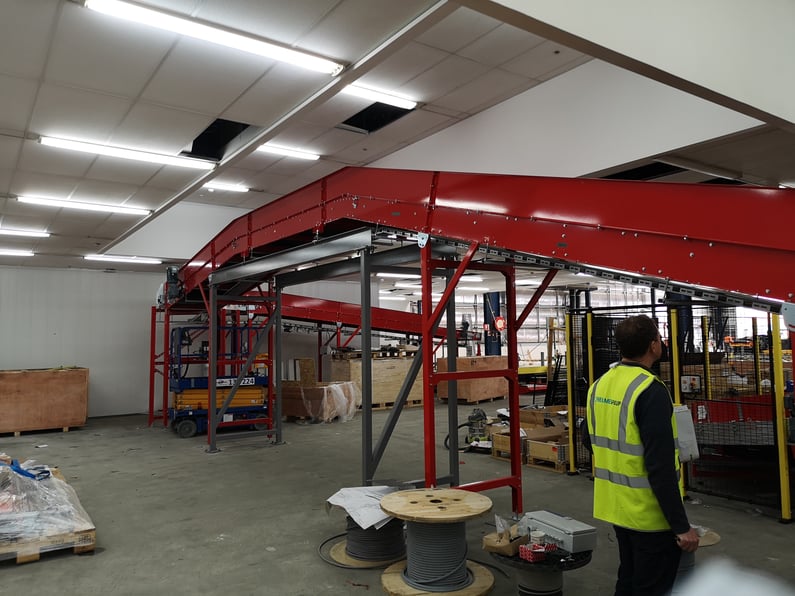
Image: MCL food-safe fabric belt conveyor
The Building Blocks of a Conveyor System
Efficient picking systems are the bottom line in achieving swift and accurate order fulfilment. Here’s why:
BELT CONVEYORS
Belt conveyors use a continuous loop of material — fabric, rubber, PVC, or modular plastic — driven by a motorised roller at one end.
Their key strength is versatility. They handle irregular, soft, or light products that rollers cannot. In a kiwifruit packhouse, belt conveyors are often used for post-grading transport where the fruit is in trays and any surface vibration risks damage.
The belt material, surface texture, speed, and incline angle all matter. A food-grade belt in a washdown environment requires different materials than a belt running packaged cartons in a dry warehouse.
ROLLER CONVEYORS
Roller conveyors use a series of mounted cylinders — powered or gravity-fed — to move product along a fixed path.
They are ideal for flat-bottomed objects: cartons, trays, totes, and pallets. In food manufacturing, roller conveyors are the workhorses of carton handling — moving packed product from filling lines through to palletising and dispatch.
The spacing between rollers is critical. Too wide and product tips or jams. Too narrow and you've over-engineered for no operational gain. That calculation depends entirely on the smallest product in your system.
MOTOR-DRIVEN ROLLERS (MDR)
MDR conveyors use individually motorised rollers — each with its own small DC motor — rather than a single drive running the whole conveyor.
This changes the game entirely. Each zone of the conveyor can be controlled independently. Product can accumulate, stop, release, and merge without a single person touching it — and without backing up into the upstream process.
For food manufacturing lines that handle mixed carton sizes or need precise product spacing before labelling or wrapping, MDR is often the right answer.
ACCUMULATION ZONES
Accumulation is one of the most undervalued design decisions in any conveyor system.
When one part of your line runs faster than another — which is almost always the case — the product backs up. Without a designed accumulation zone, that backup causes jams, product damage, or a full line stop.
A properly designed accumulation zone acts as a buffer. It holds the product gently, without pressure, and releases it smoothly when the downstream process is ready. In kiwifruit operations, this is the difference between fruit arriving at the packing station in perfect condition and fruit arriving bruised and downgraded.
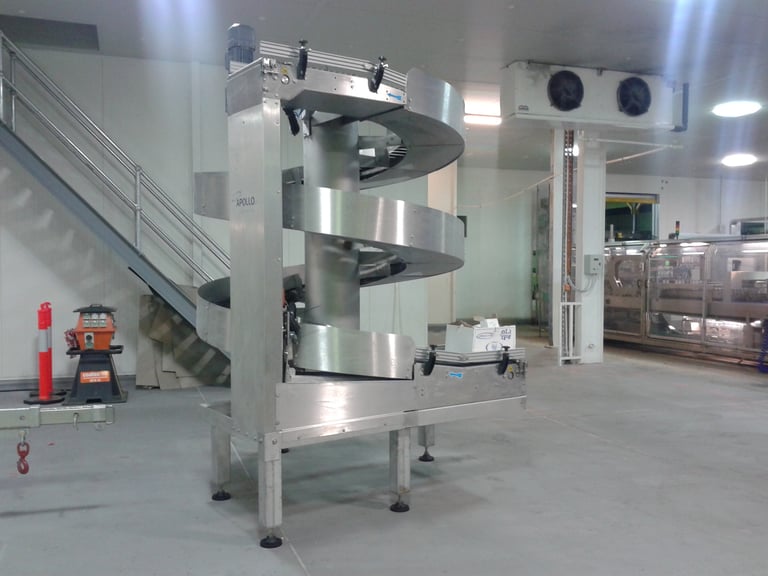
Image: Apollo VTS Spiral Conveyor
VERTICAL TRANSPORT
When your facility operates across multiple levels — and most packhouses and food factories do — you need a way to move product vertically without putting it on a forklift or asking a worker to carry it up stairs.
Spiral conveyors (like the Apollo VTS, of which MCL is New Zealand's exclusive distributor) provide continuous vertical transport in a compact footprint. A single spiral can replace an elevator, a forklift lane, and the floor space between them.
Vertical case elevators serve a similar function for boxed product — lifting cartons between conveyor levels without requiring a ramp or incline that takes up run length.
Why Design Matters More Than the Equipment Itself
Here is the thing most buyers get wrong: they focus on the product specification, not the system design.
A good belt conveyor in a poorly designed system will underperform every time. Conversely, a well-designed system using mid-range components will consistently outperform a poorly designed one using premium parts.
The design decisions that determine real-world performance include:
- Belt speed and throughput calculations — can your line physically handle your peak harvest volume without backing up?
- Transfer points — every point where product moves from one conveyor to another is a potential jam, damage event, or hygiene risk
- Drive selection and motor sizing — an undersized motor fails under full load; an oversized one wastes energy and creates excess heat
- Hygienic design — dead zones, exposed threads, and inaccessible undersides are invisible until your auditor or your QA team finds them
- Maintenance access — a well-designed system can have a belt replaced or a roller swapped in under 20 minutes; a poorly designed one takes a mechanic most of a day
- Integration with existing equipment — your new conveyor needs to connect with graders, packers, labellers, and check weighers that already exist on your floor
"The Conveyor is rarely the thing that fails. It is usually the design decision made three years earlier that nobody questioned at the time."
What This Means in Practice
In a kiwifruit packhouse, a well-designed conveyor system means trays move gently from grading machines to packing stations without a single worker manually transferring them. It means cartons accumulate smoothly before the palletiser without jamming. It means the spiral conveyor moves product to the cold store above without interrupting the flow on the ground floor.
In a food manufacturing plant, it means a packaging line running three shifts can handle variable carton sizes without a reconfiguration. It means check weighers receive product at consistent spacing and return rejects cleanly to a divert lane. It means the whole system can be hosed down at end of shift and dried quickly — because it was designed for that from the start.
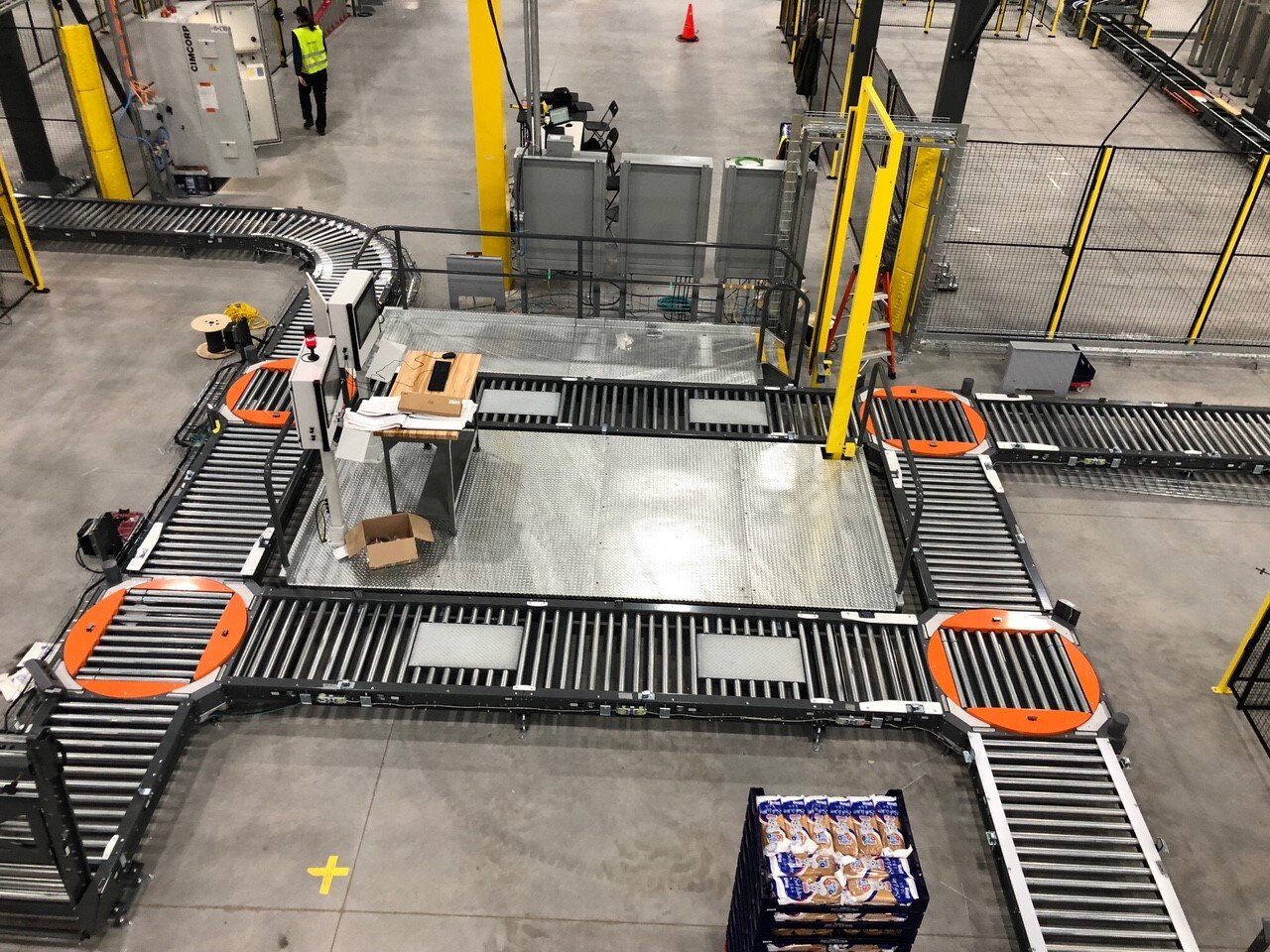
Image: MCL Roller Conveyor in-facility installation
The Questions Worth Asking Before You Buy
Here is the thing most buyers get wrong: they focus on the product specification, not the system design.
The Takeaway
Conveyor systems are not commodities. The difference between a system that runs cleanly for 15 years and one that creates problems from day one is almost never the equipment itself. It is the quality of the design behind it.
At MCL, every system starts with a conversation about your operation. Your product, your throughput, your facility, your constraints. Because a conveyor built to your exact requirements will always outperform one built to a standard template.